A finely modeled Japanese ceramic figure depicting a samurai or martial attendant holding a gunbai (war fan), dating to the late Edo period, circa 1820–1860.
The figure is rendered in hand-formed earthenware with remnants of original mineral pigments. He stands in animated posture, dressed in layered kimono and traditional chonmage hairstyle, grasping a solid war fan in one hand and a short sword at his waist. Notably, the sword hilt is wrapped with applied fiber cord, adding a rare mixed-material detail and heightened realism. A small tassel ornament hangs at the sash, further enriching the narrative character of the piece.
The expressive facial modeling and naturalistic stance suggest a theatrical or literary subject, possibly referencing kabuki or historical warrior iconography. The sculpture is hollow-formed with visible hand-worked interior, consistent with Kyoto-area ceramic traditions of the early 19th century. The underside remains open and unglazed, typical of Edo-period workshop production.
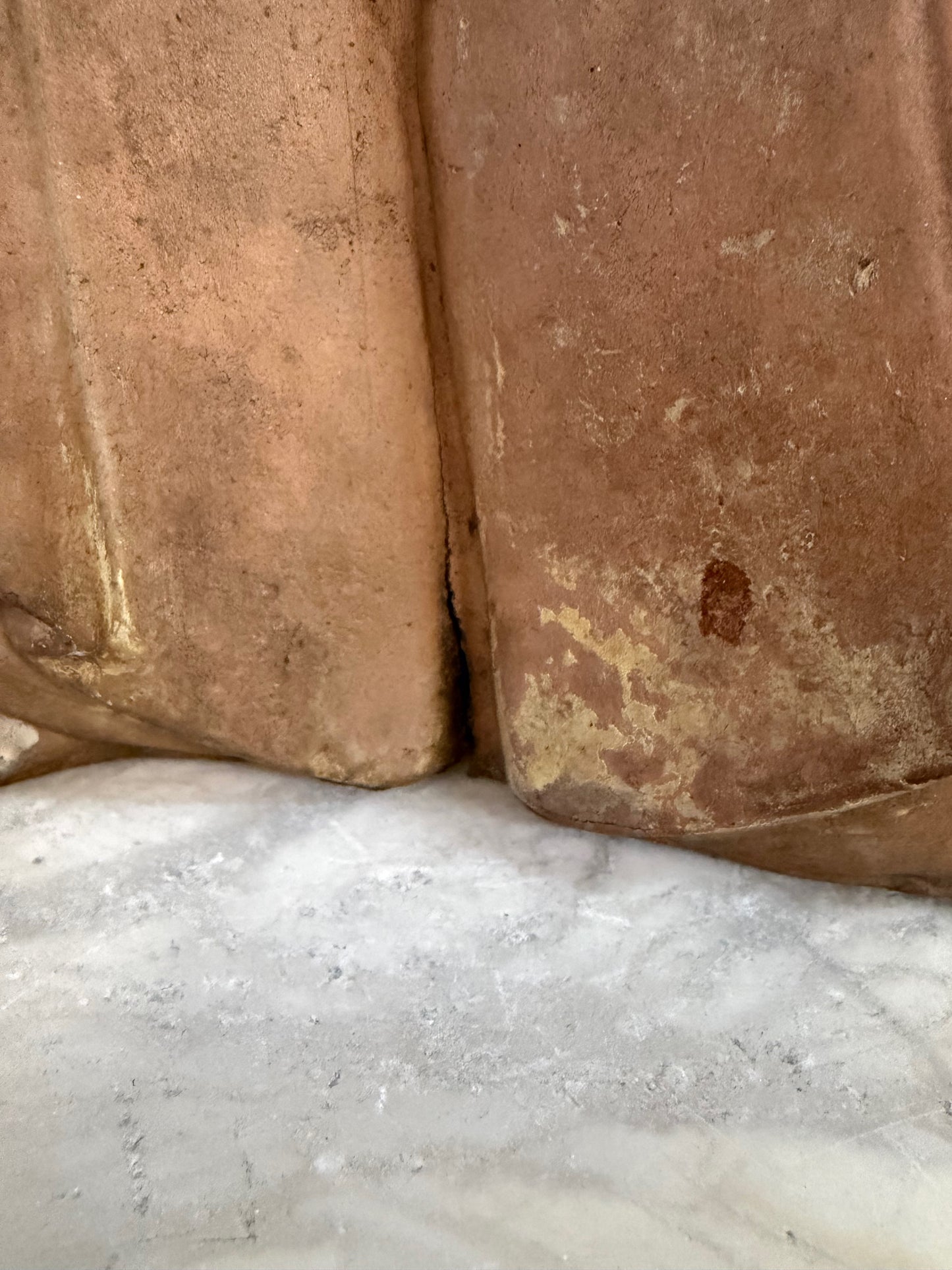
Surface wear and pigment loss are commensurate with age and lend authenticity and warmth. No visible modern restorations observed.
A compelling example of late Edo narrative ceramic sculpture with strong presence and sculptural integrity.
Japan, circa 1820–1860 Hand-modeled earthenware with original polychrome decoration